
SeaJets vs Blue Star Ferries in the Greek Islands
Booking a ferry in Greece shouldn’t be complicated, but somehow it always ends up feeling that way. You search a route, see three or four different operators with wildly different prices and travel times, and suddenly you’re down a rabbit hole trying to figure out if the cheap slow boat is actually fine or if you need to pay double for the fast one.
We’ve taken both SeaJets and Blue Star Ferries multiple times, on routes between Santorini, Paros, Naxos, and Athens, in calm weather and in the kind of wind that makes you question your life choices. After all of that, we have a clear preference and a clear recommendation depending on what your trip looks like.
This guide breaks down both operators honestly, what the experience is actually like on each, who each one suits, and which one to book for your trip to Naxos or Paros.
The Quick Answer
For most travelers heading to Naxos or Paros, Blue Star Ferries is the better choice.
It’s more comfortable, significantly cheaper, handles rough seas better, and the onboard experience is a genuine pleasure rather than something to endure.

SeaJets is faster and worth it for longer crossings when time matters, but it’s expensive, can be rough in windy weather, and is not a good choice if you’re prone to seasickness, so book SeaJets when you’re short on time and need to cover a longer route quickly.
But for the shorter inter-island trips, the time difference rarely justifies the price gap.
|
. |
SeaJets |
Blue Star Ferries |
|---|---|---|
|
Comfort |
Fast (high-speed catamaran) |
Slower (conventional ferry) |
|
Outdoor Access |
Assigned seats, airplane-style |
Open plan, roam freely |
|
Price |
Very Limited |
Yes, multiple outdoor decks |
|
Seasickness Risk |
Higher (€50 to €90 Piraeus to Naxos) |
Lower (€30 to €50 Piraeus to Naxos) |
|
Speed Risk |
High in rough weather |
Low, Very stable |
|
Vehicle Transport |
Limited |
Yes, car-friendly |
|
Best For |
Long routes, tight schedules |
Almost everything else |
SeaJets (Best When Speed Matters)
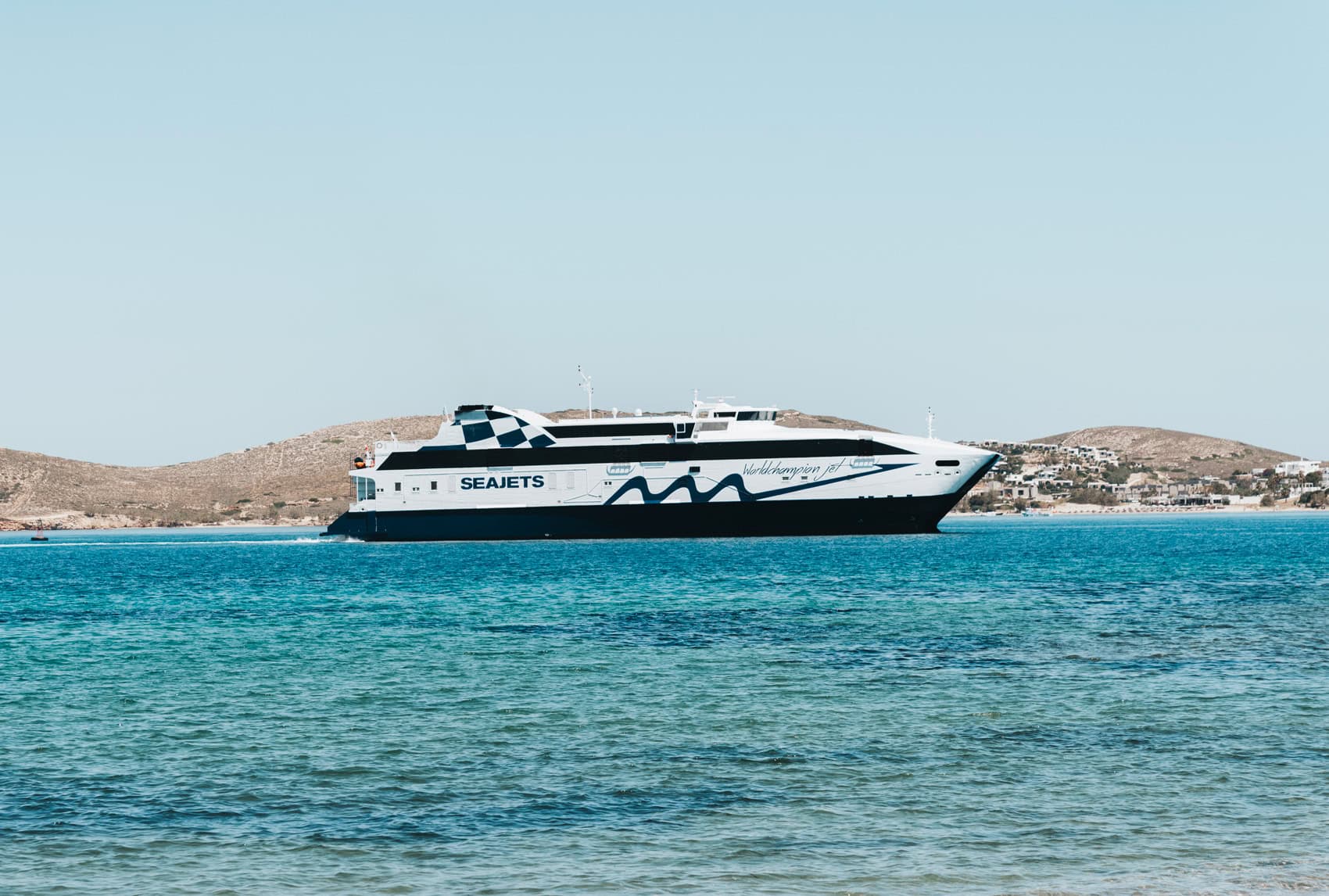
SeaJets is the fastest way between most Cycladic islands, and there are situations where that speed is genuinely worth paying for. Longer routes where Blue Star would take five or six hours are the obvious case. For those, we’ll take SeaJets and accept the tradeoffs.
But the tradeoffs are real, and we’ve experienced them firsthand enough to be direct about it.
What the Experience Is Actually Like
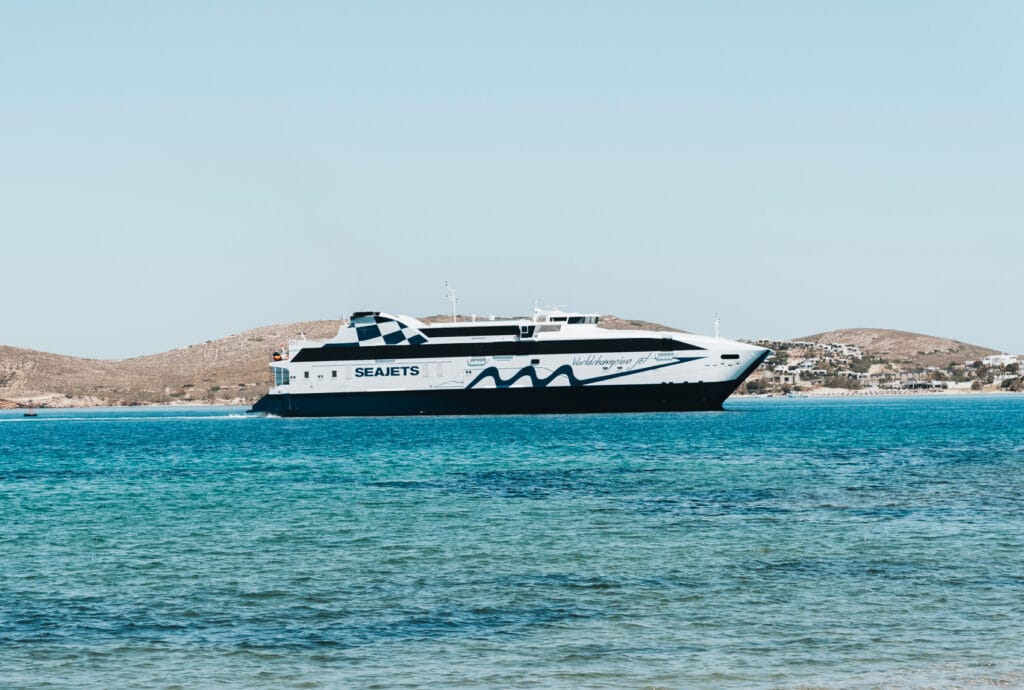
SeaJets operates high-speed catamarans with assigned seating, airplane-style. You board, find your seat number, sit down, and stay there. There’s no outdoor access, no wandering between decks, no watching the islands from an open deck. The windows are the view, and that’s it.
On calm days, this is fine. The ride is smooth enough, the seats are reasonable, and you get where you’re going quickly.
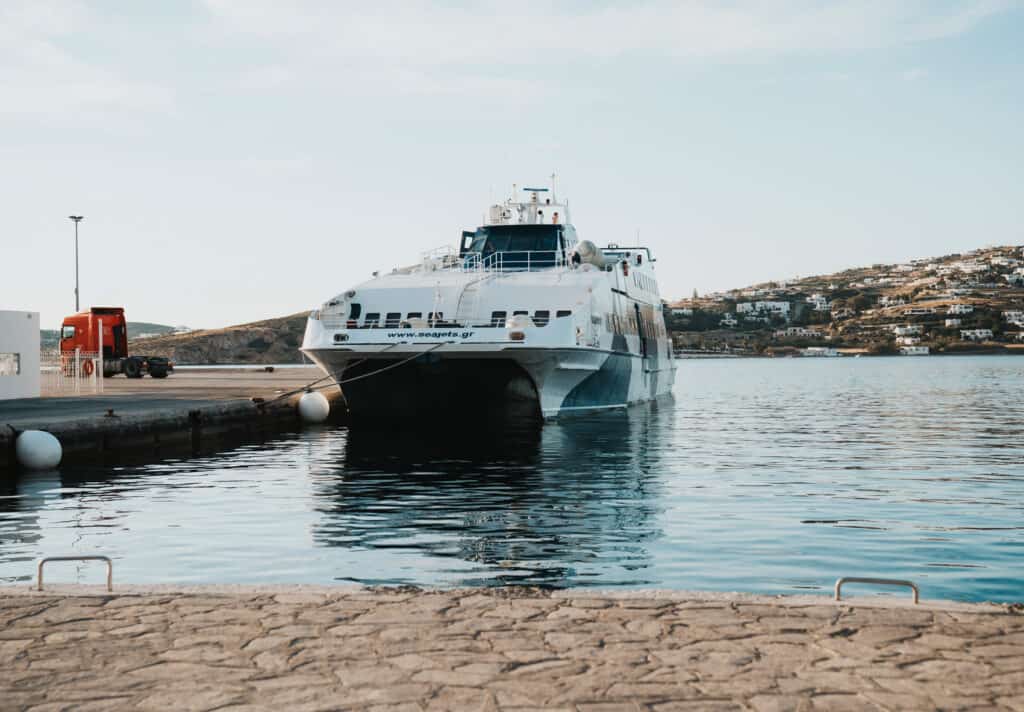
On windy days, it’s a different story.
On a crossing from Paros to Athens during strong winds, the boat was pitching enough that walking to the bathroom without holding on to something was genuinely difficult. That’s not an exaggeration.
The meltemi hits high-speed catamarans hard because of their size and design, and if you’re at all prone to seasickness, you will feel it.

The meltemi blows most strongly from mid-July through August, which is also peak travel season. If you’re planning ferry travel during those months and you know you’re sensitive to motion, book Blue Star without hesitation.
Also, our guide to getting around Paros covers your full transport options once you arrive.
SeaJets is also the more expensive option on almost every route, sometimes significantly so. You’re paying for speed, and it’s worth being honest with yourself about whether that speed actually changes your trip in a meaningful way.
Routes, Frequency, and Vehicles
SeaJets covers a wide network of Cycladic routes and generally has more daily departure options than Blue Star on the same routes, particularly for inter-island hops. If you need a specific departure time or want flexibility throughout the day, SeaJets often gives you more slots to choose from.
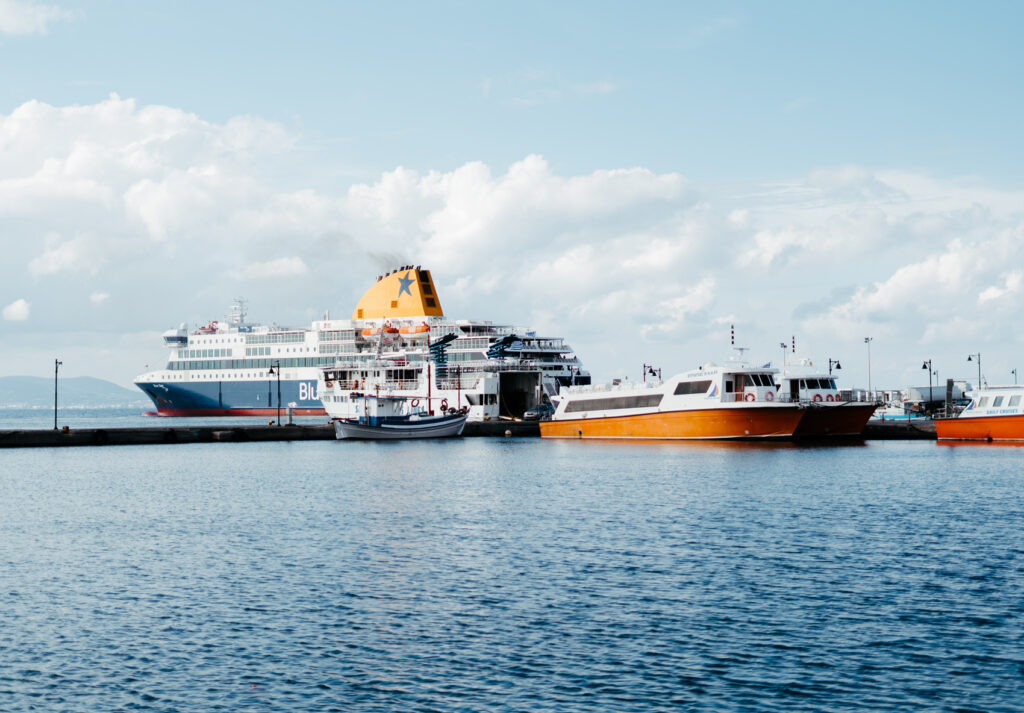
Vehicle transport is limited. SeaJets operates high-speed catamarans, which are not designed to carry cars.
If you’re planning to rent a car in Naxos or Paros once you arrive, you really need to book ahead to get a ferry that ensures you can transport your vehicle.
Blue Star Ferries (Our Preferred Option)
Blue Star Ferries is what we use by default for routes between the islands, and we’ve never regretted it. It runs daily from Piraeus to Paros and Naxos, stops along the way at other Cycladic islands, and arrives on schedule more often than not. More importantly, the experience onboard is one we actually look forward to rather than just tolerate.
What the Experience Is Actually Like
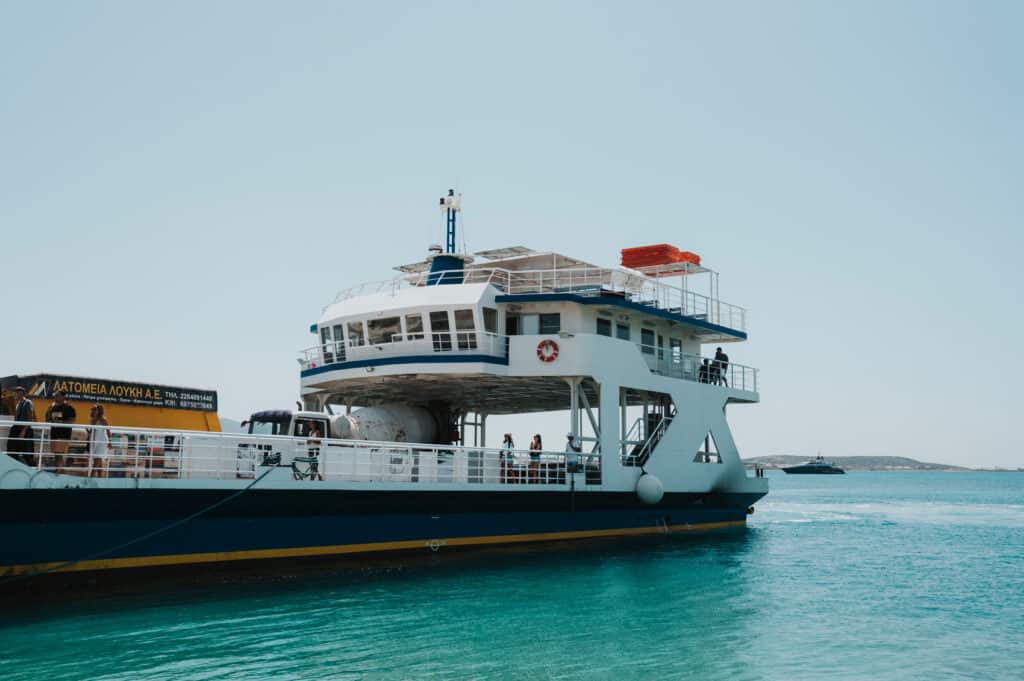
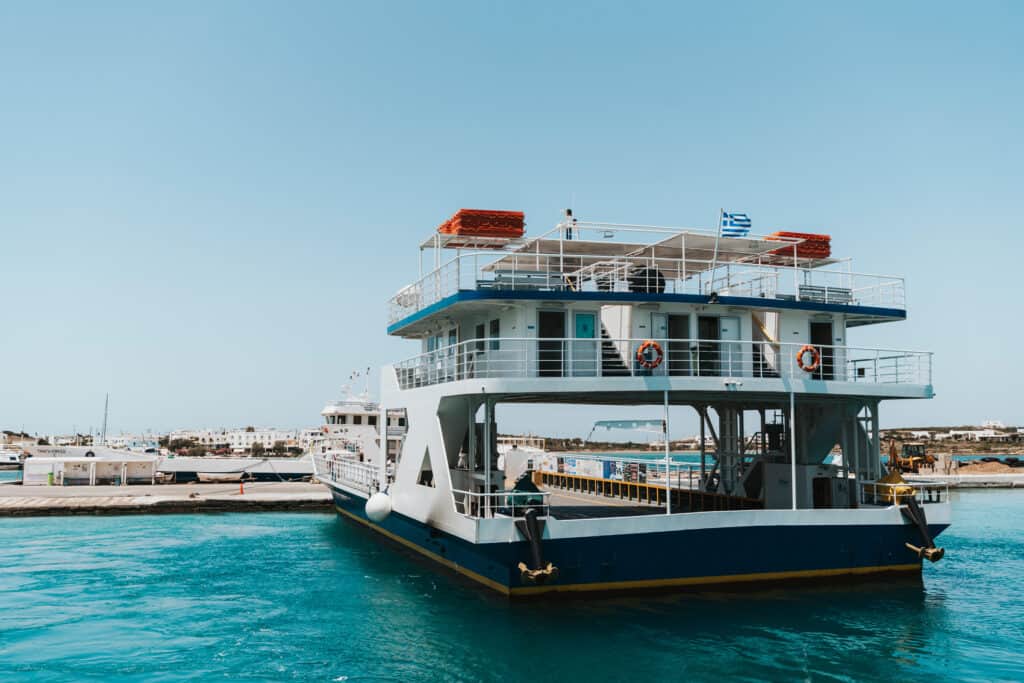
The first thing that hits you when you board a Blue Star ferry is how big it is. This isn’t a boat. It’s a proper ship with multiple levels, wide corridors, and enough space that it never feels crowded even in peak season. We’ve described it to people as feeling somewhere between a cruise ship and an airport lounge, and that’s genuinely accurate.
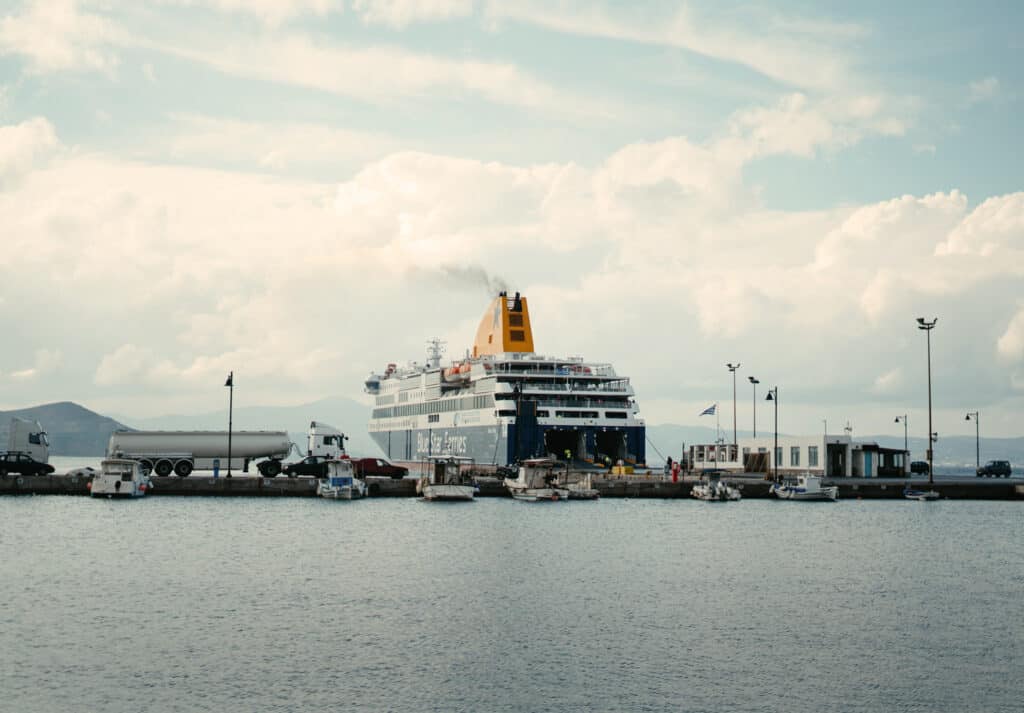
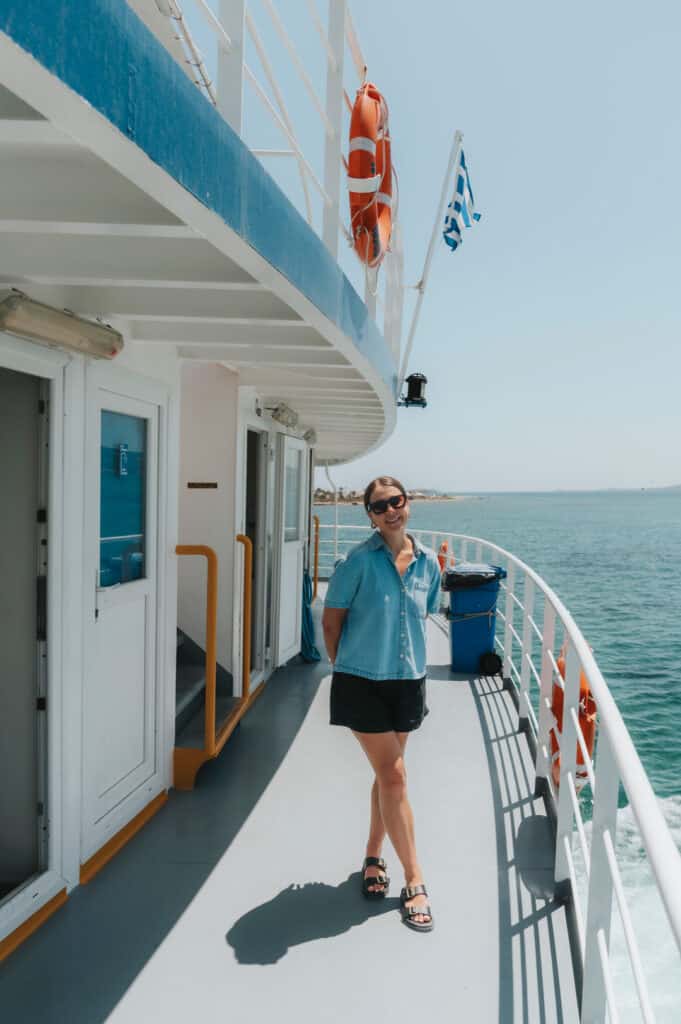
The outdoor decks are one of the things we love most. There’s seating outside where you can watch the islands pass as you cross the Aegean, and Sarah spent a significant amount of time out there on our crossings. It’s one of those travel experiences that feels cinematic in the best way: open sea, wind, the silhouette of an island appearing on the horizon. You don’t get that on SeaJets.
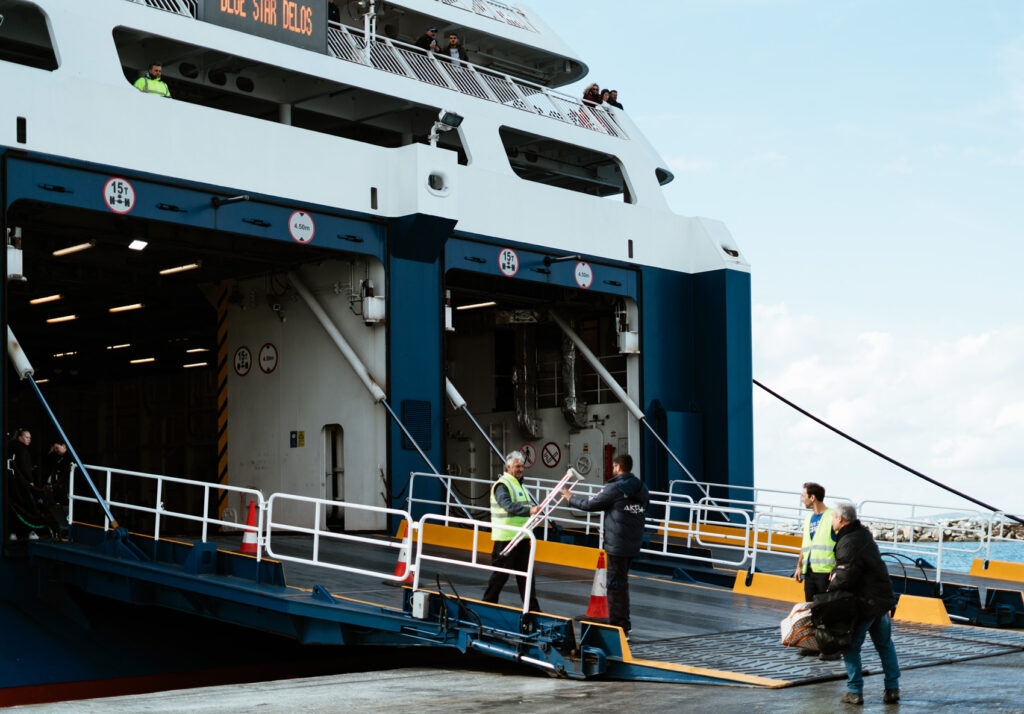
Even on windy days, we never felt the boat rock in any meaningful way. The size of the vessel works in your favor here. Where a smaller high-speed catamaran will pitch and roll in rough seas, Blue Star barely registers the same conditions.
The Onboard Experience
There’s a full restaurant onboard, plus a coffee and snack bar for shorter crossings when you don’t want a full meal. Seating is open plan with no assigned spots, so you can move around freely, claim a table near a window, or head outside whenever you want. It genuinely feels like freedom compared to the assigned seat, eyes-forward setup of SeaJets.
Wi-Fi is available on most crossings, though we wouldn’t rely on it for anything important. Bring a book or download something before you board, and you’ll be well set for the journey.
Routes, Frequency, and Vehicles
Blue Star runs daily from Piraeus (Athens) to Paros and Naxos, with the Paros crossing taking around four to four and a half hours and Naxos adding roughly another hour. In peak season, there can be multiple daily sailings. In shoulder season, expect one or two per day.
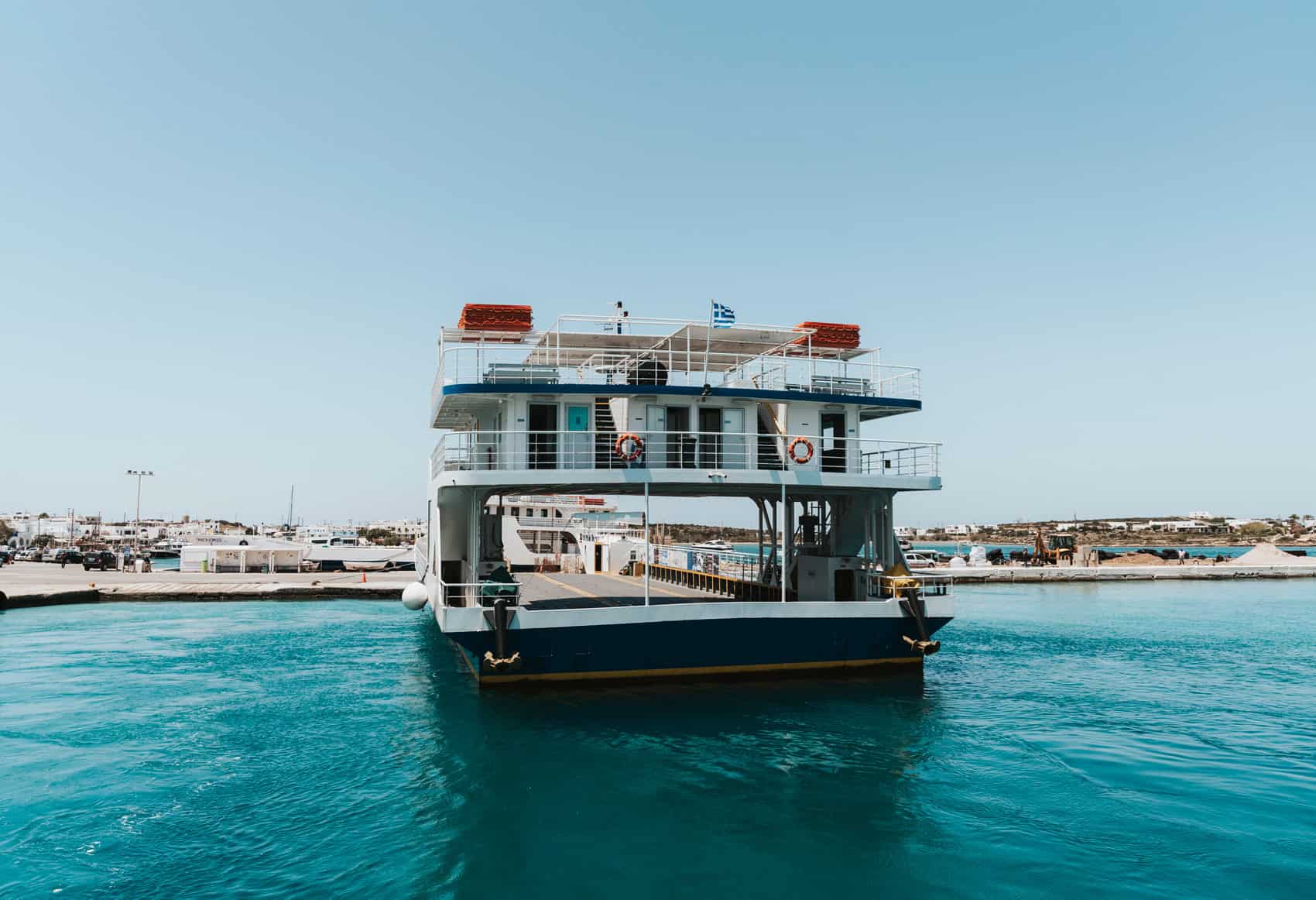
Crucially, Blue Star is car-friendly. If you’re planning to bring a rental car between islands or transport your own vehicle, Blue Star is the operator to use. SeaJets has far fewer vessel types that can accommodate vehicles, and it’s not something you can count on.
For inter-island hops like Paros to Naxos, the crossing is around one hour on Blue Star. Yes, SeaJets does it faster, but the time difference on a one-hour route is genuinely not worth factoring in.

Ticket Prices and Where to Book
Blue Star is consistently the cheaper option on every route to Naxos and Paros. Economy seats from Piraeus to Paros typically run €30 to €40, Piraeus to Naxos comes in around €35 to €50, and inter-island crossings like Paros to Naxos are usually €15 to €25. SeaJets runs roughly double on most of the same routes: Piraeus to Naxos typically costs €55 to €90, and even the shorter inter-island hops carry a premium over Blue Star for a crossing that takes only marginally less time.
Prices on both operators vary by season, with the lowest fares in spring and late autumn and the highest in July and August. Booking a few weeks ahead in peak season can make a noticeable difference to what you pay, particularly on SeaJets where popular weekend departure times sell out and prices climb further.
One practical difference worth noting: Blue Star has no assigned seats in economy class, so you board and find your own spot. On a ship this size that has never been an issue for us in practice. SeaJets has assigned seating, so there’s no scramble when you board, but whether that justifies the price gap is a personal call. On shorter inter-island routes, our honest view is that it doesn’t.

Where to Book
We use Ferryscanner for every ferry we take in Greece. It pulls together schedules and prices from all major operators in one place, so you can compare Blue Star and SeaJets side by side on the same screen rather than jumping between sites. The free cancellation up to 48 hours before departure is the main reason we keep coming back to it: it lets you lock in a ticket before things sell out without being stuck if your plans change.
Mobile tickets are standard on both operators, so you won’t need to print anything. Download your ticket before you leave your accommodation in case you lose signal near the port.
SeaJets tickets from Piraeus to Naxos typically run €50 to €90, sometimes higher in peak season. That’s roughly double Blue Star on the same route. For shorter inter-island crossings like Paros to Naxos, the price gap is smaller but the journey time difference is also minimal, which makes Blue Star the obvious call.
Which Ferry Should You Book?
The honest answer for most people heading to Naxos or Paros is Blue Star. But there are specific situations where SeaJets makes sense, and it’s worth being clear about both.
Book Blue Star Ferries If…
You’re traveling from Athens (Piraeus) to Paros or Naxos and the journey is your main crossing of the day. The time difference between Blue Star and SeaJets on these routes is pretty big, but so is the price gap, and the Blue Star experience is comfortable enough that the extra time doesn’t feel like a sacrifice.
You’re traveling with kids, bringing a lot of luggage, or transporting a vehicle. Book it if you’re even slightly prone to seasickness. Book it if you want to actually enjoy the crossing rather than just survive it. And book it if you’re visiting during July or August when the meltemi is at its strongest and high-speed catamarans feel every bit of it.
You’re taking the shorter inter-island routes like Paros to Naxos, Blue Star is almost always the right call. The crossing is around an hour either way. SeaJets might shave 20 to 30 minutes off that, but you’re paying more for the privilege and giving up the outdoor deck to do it.

Book SeaJets If…
You’re covering a longer route and the time saving is genuinely significant for your itinerary. Athens to Santorini, for example, takes around five hours on Blue Star and closer to three on SeaJets. If you’re doing a one-day transfer between two distant islands and every hour matters, that’s a legitimate reason to pay the premium.
Book SeaJets if you have a tight connection, an afternoon flight out of Athens, or a schedule that simply can’t absorb a longer crossing. Just go in prepared: take seasickness medication beforehand if there’s any chance of rough weather, board early to get a midship seat on the lowest deck, and accept that the experience is functional rather than enjoyable.
Also book SeaJets if the Blue Star schedule doesn’t work for your departure time. In some cases SeaJets simply offers more departure slots, and a timely departure on SeaJets beats waiting hours for the next Blue Star.
Practical Tips + FAQs
Is Blue Star Ferries better than SeaJets?
For most routes to Naxos and Paros, yes. Blue Star is more comfortable, significantly cheaper, handles rough seas far better, and the onboard experience is genuinely enjoyable with outdoor decks, a restaurant, and freedom to move around. SeaJets is faster and worth it for longer crossings when time is tight, but for the majority of travelers on the Athens to Paros or Paros to Naxos routes, Blue Star is the better choice.
Can SeaJets make you seasick?
Yes, and it’s not a minor risk. SeaJets operates high-speed catamarans that are smaller and more susceptible to rough seas than conventional ferries like Blue Star. During meltemi season in July and August, crossings can be genuinely rough. On a windy crossing from Paros to Athens, we found it difficult to walk to the bathroom without holding on. If you have any history of motion sickness, take medication before you board and sit midship on the lowest deck available.

Do Blue Star Ferries take cars?
Yes. Blue Star operates large conventional car ferries and is the standard option for anyone transporting a vehicle between islands. SeaJets high-speed catamarans are not designed to carry cars, so if vehicle transport is part of your plan, Blue Star is the only realistic choice between the two operators.
How long is the ferry from Athens to Naxos on Blue Star?
The Blue Star crossing from Piraeus to Naxos takes approximately five to five and a half hours, with a stop at Paros along the way. SeaJets covers the same route in around three to three and a half hours. For most travelers, the extra time on Blue Star is worth it given the price difference and the comfort of the crossing.
Is SeaJets worth the extra cost?
It depends entirely on the route and your schedule. For longer crossings where Blue Star would take five or six hours, the SeaJets time saving can be genuinely valuable. For shorter inter-island routes like Paros to Naxos, the time difference is small enough that Blue Star is almost always the better value. SeaJets tickets typically run €55 to €90 versus €35 to €50 for Blue Star on the same route.
Where do I book ferries to Naxos and Paros?
We use Ferryscanner for every crossing. It compares routes, operators, and prices across all available options in one place and offers free cancellation up to 48 hours before departure. It’s the simplest way to see your options without jumping between multiple booking sites.

How far ahead should I book a ferry to Naxos or Paros?
For July and August, book as early as possible, ideally several weeks out. Popular departure times on both operators sell out quickly in peak season. For shoulder season travel in May, June, September, and October, a week or two in advance is usually enough. Winter sailings run less frequently, so confirm the schedule before you book rather than assuming your preferred crossing is running.
Which port do ferries to Naxos and Paros leave from?
From Athens, both Blue Star and SeaJets depart from Piraeus, the main port, which is around 45 minutes from the city center by Metro. Blue Star typically leaves from Gate E7 or E9, though this can vary, so check your ticket on the day and arrive at least 45 to 60 minutes before departure. For inter-island crossings, ferries depart from Parikia Port on Paros, which is right in the center of town.
What should I bring on a Greek island ferry?
On Blue Star, a light jacket for the outdoor deck, something to read or download in advance, and snacks if you prefer not to use the onboard restaurant, though the cafe covers coffee, drinks, and hot food if you do.
On SeaJets, pack light and keep essentials in a small accessible bag since overhead storage is limited. On either operator, download your mobile ticket before leaving your accommodation in case you lose signal near the port (even more necessary in Athens).
Both ferries will get you where you’re going, but knowing which one to book makes the journey a much better part of the trip. For the specific route details you’ll need once you’ve decided, our guides to the Naxos to Paros ferry and the Paros to Naxos ferry cover schedules, ports, and what to expect on each crossing. If you’re still putting your trip together, the Naxos itinerary and Paros itinerary are good places to start.


![Renting a Car in Naxos: The ONLY Guide You Need [2026]](https://explorenaxosparos.com/wp-content/uploads/2025/05/Naxos_Car_Rental-10-768x556.jpg)
