
The Best Time to Visit Naxos (Season-by-Season Guide)
If you’re trying to figure out the best time to visit Naxos, you’ve probably already noticed that most answers online are vague. “Shoulder season is best.” “July is busy.” “Winter is quiet.” None of that actually helps you decide when to book.
We’ve spent time on Naxos in both winter and summer, including a stretch in November and December when we were living nomadically across Greece, and a return visit in June when we finally got to experience the island the way most travelers do. The difference between those two trips was stark enough that it genuinely changed how we talk about timing with people who ask us.

This guide breaks down every season honestly, including what we found when we showed up in winter and almost nothing was open, how the Meltemi winds actually affected our June plans, and which month we’d personally book if we were heading back tomorrow.
TL;DR: The best time to visit Naxos is late May through June or September. You’ll get warm weather, open beaches, and full access to the island without peak-season pricing or the strongest Meltemi winds. July and August are great if you love a lively atmosphere and don’t mind paying more. Avoid winter unless you’re looking for a quiet, affordable base with very few other tourists around.
What Is the Best Time to Visit Naxos?
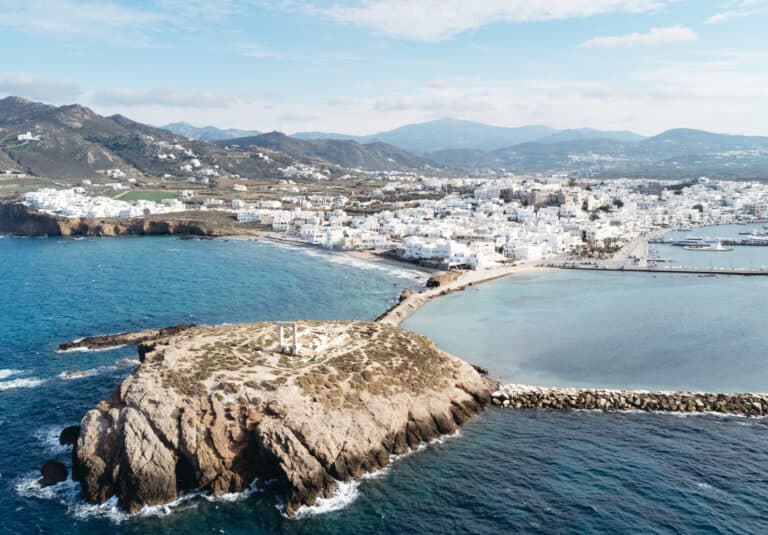
The best time to visit Naxos is late May through June or September. These shoulder months give you warm temperatures (around 25°C/77°F), a fully open island, and noticeably fewer crowds than July and August. The sea is warm enough for swimming, prices are reasonable, and the Meltemi winds are less intense than at peak summer. For most travelers, this is the sweet spot.
Naxos in June (Our Personal Pick)
We visited Naxos in June and it hit the balance we were looking for. The island was alive, everything was open, and the beaches were genuinely enjoyable without feeling overcrowded.
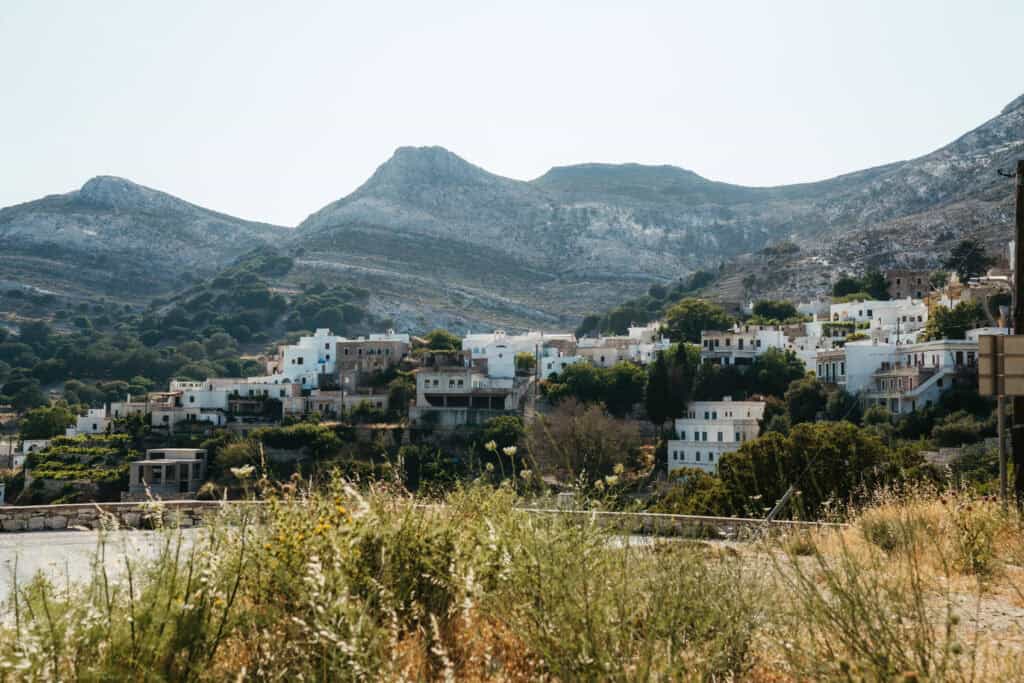
We stayed in Agios Georgios, the beach town right next to Naxos Town (Chora), and found it easy to get around. Parking was never a problem, even near the beach. That surprised us a little, since we’d read that summer on a Greek island meant chaos. June is busy, but it doesn’t feel overwhelming.

What the Weather and Beaches Are Like in June
In June, average daytime temperatures on Naxos sit around 26°C to 28°C (79°F to 82°F), with plenty of sunshine and very little rain. The sea temperature is typically around 22°C to 23°C (72°F to 73°F), which is comfortable for swimming without the intensity of August heat.
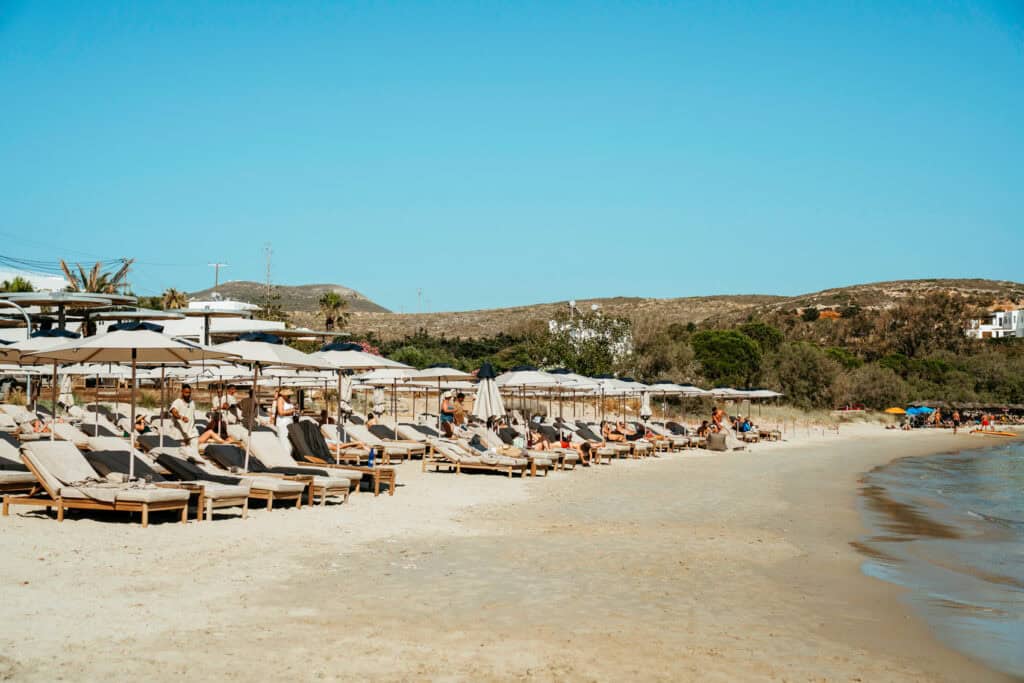
The beaches are in full swing. Sunbeds are out, beach bars are open, and you can actually enjoy the full Naxos beach experience that most people come here for.
Crowds and Parking: What to Actually Expect
June is noticeably busier than May, but it’s not the wall-to-wall crowds you’ll find in July and August. In our experience, parking near the main beach areas in Agios Georgios wasn’t an issue. Agios Prokopios, which sits just north of Agia Anna, does draw more visitors and can get busier than the beaches further south.
If you want more breathing room on the sand, the beaches along the southwestern coast tend to be quieter even in June.
How the Meltemi Winds Actually Work
The meltemi is a strong, dry northerly wind that blows across the Aegean during summer, typically from mid-July through August, though it can show up in June too. On the days it was blowing during our visit, we felt it. It wasn’t dangerous, but it was strong enough that we kept an eye on the forecast before booking our boat tour.
The practical reality is that the wind is inconsistent. You can have a perfectly calm, glassy day followed by a day where the beach feels like a wind tunnel. Beaches on the southwestern side of the island are naturally more sheltered. In June, the meltemi is generally less intense and less frequent than it is in July and August, which is part of why we’d recommend it as a better month for boat trips specifically.
For ferry travel, strong meltemi can occasionally cause delays or cancellations, particularly on smaller vessels. This is more of a concern in peak summer than in June, but it’s worth factoring in if you have connecting ferries on a tight schedule.
What’s Open and What to Do in June
Everything is open in June. Restaurants, beach bars, boat tour operators, rental shops, all of it. The villages inland, like Chalki and Apeiranthos, are accessible and worth a day trip. The historical sites, including the Portara and the Temple of Demeter, are running normal hours.
This is also a good month to plan a boat trip around the island or out to nearby smaller islands, since the sea conditions are generally more reliable than in peak summer.

Book Your Ferry and Car Early
For June, we’d recommend booking your ferry at least a few weeks in advance, especially if you’re traveling on a weekend. We use Ferryscanner to compare routes and prices across operators, and it’s the easiest way to see everything in one place. One of the main reasons we prefer it over other platforms is the free cancellation up to 48 hours before departure, which gives you some flexibility if your plans shift.
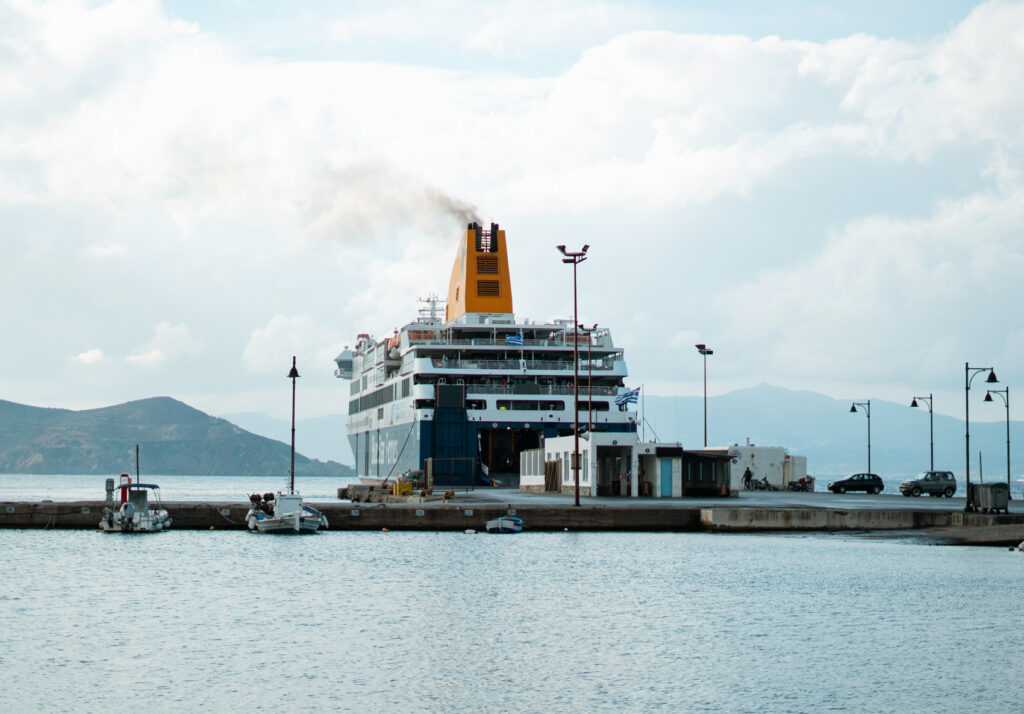
For car rental, book ahead too. Availability doesn’t dry up as fast as it does in July and August, but prices do start climbing as the month goes on. We’ve used Discovercars to compare rental options across the island and found it straightforward.

→ Search Ferry Prices on Ferryscanner
→ Compare Car Rental Rates on Discovercars
Naxos in July and August (Peak Season)
July and August are the most popular months on Naxos, and for good reason. The weather is hot and reliable, the island is fully buzzing, and if you’re coming for the beach experience above everything else, this is when it’s at its peak.
We haven’t spent an extended stretch on Naxos in peak July or August ourselves. But after multiple visits to the island across different seasons, and conversations with people who have, the picture is consistent: it’s excellent if you’re prepared for it, and frustrating if you’re not.
What Peak Season Actually Looks Like
July and August temperatures regularly hit 30°C to 33°C (86°F to 91°F), sometimes higher. The sea is at its warmest, hovering around 25°C to 26°C (77°F to 79°F). The beaches are busy, Agios Prokopios in particular draws large crowds, and accommodation prices are at their highest point of the year.
According to the Greek National Tourism Organisation, the Cyclades see the highest visitor numbers from mid-July through late August, with Naxos being one of the more popular islands in the group.
The meltemi is also at its strongest during this window. It can be a welcome relief from the heat on some days, but on others it makes certain beaches unpleasant and can affect ferry schedules.
The Case for Going in Summer Anyway
The island is at its most alive. Every restaurant is open, nightlife is actually happening in Naxos Town, boat tours run daily, and the social energy of a busy Greek island in summer is hard to replicate at other times of year.
Sarah’s preference, if she had the choice, would be to visit in the height of summer. She values the warmth and the full beach experience above the tradeoffs of crowds and cost, and that’s a completely valid way to approach it. If being on a sun-drenched beach in 30°C (86°F) heat with a cold drink and the whole island in full swing is what you’re after, July and August deliver that.
How to Make Peak Season Work
A few things that help in July and August: book accommodation well in advance (months ahead for anything near the beach), rent your car before you arrive, and plan beach days at either end of the day to avoid the hottest hours. For beaches that hold up better under the wind, the southwestern coast is more sheltered.
Agios Prokopios is the most famous beach and gets the most foot traffic. If you want space, explore some of the quieter options further south.
What the Price Difference Looks Like
This is something we noticed directly. The cost of visiting Naxos in July and August can be roughly double what you’d pay in May or early June. That applies to hotels, car rentals, and to a lesser extent, restaurants and activities. If budget is a factor, the shoulder months offer significantly better value for a very similar experience.
Naxos in September and October (The Other Sweet Spot)
September might actually be the best month of all to visit Naxos, and it’s the one that tends to get overlooked. The summer crowds have thinned, the sea is at its warmest after three months of July and August heat, and the island still has everything open.
If June is the smart choice for people who want to avoid peak season on the way in, September is the smart choice for people who want to catch it on the way out.
Why September Is Worth Seriously Considering
In September, sea temperatures peak at around 24°C to 26°C (75°F to 79°F), which is actually warmer than June. Air temperatures settle into the mid-to-upper 20s Celsius (low 80s Fahrenheit), the meltemi has largely wound down, and the beaches feel noticeably less crowded than they did a month earlier.
Prices also start to drop from their August peak. You won’t find the deep discounts of May, but you’ll pay less than summer rates for a better-than-summer experience in many ways.
It’s also harvest season across the Cyclades. Grape harvests and olive picking are underway in the villages, and if you make time to explore inland, the island has a different energy than it does in the height of tourist season.
What Starts to Close in October
Early October is still very much a viable time to visit. The first two weeks feel similar to September, with good beach weather and most things still open. By the second half of October, the picture changes. Temperatures start dropping into the low 20s Celsius (low 70s Fahrenheit), some beach bars and rental shops begin closing for the season, and ferry frequency starts to reduce.
If you’re visiting in October, aim for the first two weeks. By the end of the month, the island is winding down and you’ll start running into closed doors.


Naxos in Spring (April and May)
Spring is a genuinely lovely time to visit Naxos, particularly if your priorities are hiking, exploring the villages, and experiencing the island without other tourists around.The landscape is green in a way it simply isn’t in summer. Wildflowers are out, the mountains are lush, and the light is softer. For anyone interested in the historical sites, including the Portara and the Temple of Apollo, the archaeological museum in Naxos Town, or the Byzantine trail through the interior, spring is ideal.
The Weather and What’s Open in Spring
April temperatures average around 18°C to 20°C (64°F to 68°F), warming to 22°C to 24°C (72°F to 75°F) by May. The sea is still cool in April, typically around 17°C (63°F), making beach swimming uncomfortable for most people. By May, it’s warmer but still not quite the swimming conditions you’d get from June onward.
Most tourist businesses reopen around Easter, which falls in April or May depending on the year. By mid-May, the island is largely operational. Some of the more seasonal beach bars and boat tour operators hold off until June, so it’s worth checking ahead if there’s something specific you’re planning around.
Who Spring Is Best For
Spring suits hikers, history lovers, and anyone who finds the idea of having a Greek island largely to themselves appealing. It’s also a good option if budget is a primary concern. Accommodation and car rental rates are at their lowest point of the year, and you’ll find the island feels genuinely local rather than tourist-driven.
If your trip is primarily about beaches and swimming, spring is not the right call. But if you want to explore Naxos beyond the coastline, it’s one of the most rewarding times to go.
Naxos in Winter (November to March)
We visited Naxos in November and December, and we’ll be honest with you: we were living nomadically at the time and had just spent about two months traveling around Greece. We weren’t looking for a typical holiday. We wanted somewhere quiet, affordable, and interesting enough to keep us occupied. Naxos delivered on all three, but it would have been a disappointing trip if we’d arrived expecting a summer island experience.
What We Actually Found in November and December
The island was essentially closed to tourists. A handful of local tavernas were open, the grocery stores were running, and a couple of coffee shops in Naxos Town were operating. That was about it. The beach towns like Agia Anna were shut down entirely. Chalki and the inland villages were quiet to the point of feeling deserted.
The weather sat around 10°C to 14°C (50°F to 57°F) most days, with overcast skies and occasional rain. We spent most of the time in pants and a sweatshirt. There were no beach days.

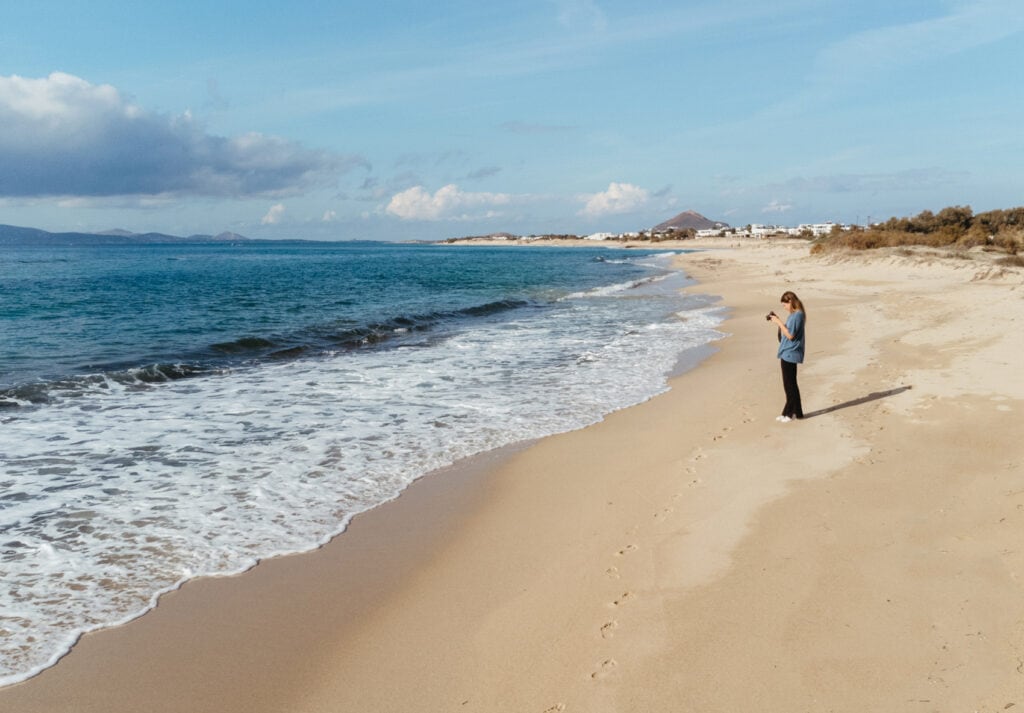
What winter did give us was the historical sites almost entirely to ourselves. The Portara at sunset with no one else around is a different experience entirely from visiting in June. The Archaeological Museum of Naxos was peaceful. The mountain villages had a stillness to them that was actually quite special after months of busy tourist destinations.Ferries still run in winter, but on reduced schedules. According to Blue Star Ferries, winter routes to the Cyclades run less frequently and with fewer options between islands. Planning around ferry schedules becomes more important in the off-season.
Who Should Actually Consider a Winter Visit
Winter on Naxos makes sense for a specific kind of traveler, specifically someone who wants a slow, affordable base in Greece with easy access to Athens, doesn’t need beaches or tourist infrastructure, and genuinely appreciates the quiet. Digital nomads, writers, people who’ve already done the summer Greek island trip and want something completely different.
For a first visit, or for anyone whose trip is anchored around beaches, boat tours, or a particular list of things to do, winter is not the right time. You’ll arrive to find most of what you came for is closed.
Naxos Season at a Glance
|
Month |
Av. Temp |
Sea Temp |
|---|---|---|
|
Jan – Mar |
14°C (57°F) |
16°C (61°F) |
|
April |
18°C (64°F) |
17°C (63°F) |
|
May |
23°C (73°F) |
19°C (66°F) |
|
June |
27°C (81°F) |
22°C (72°F) |
|
July |
30°C (86°F) |
25°C (77°F) |
|
August |
32°C (90°F) |
26°C (79°F) |
|
September |
28°C (82°F) |
25°C (77°F) |
|
October |
22°C (72°F) |
23°C (73°F) |
|
Nov – Dec |
14°C (57°F) |
18°C (64°F) |
Practical Tips for Any Season
Do You Need to Rent a Car in Naxos?
Yes, for almost every season. Naxos is the largest island in the Cyclades, and the beaches, villages, and sites you’ll want to see are spread out enough that relying on buses isn’t practical for most itineraries. We rented a car on both our winter and summer visits, and it made a significant difference in how much we could see each day.

The bus network covers the main routes, but schedules are limited and don’t reach many of the places worth visiting. Our full guide to driving in Naxos covers what to expect on the roads and how to navigate the island confidently.
Booking Ferries: What Changes by Season
The number of daily ferry crossings to Naxos from Athens (Piraeus) varies significantly by season. In peak summer, there can be ten or more daily crossings from multiple operators. In winter, that number drops considerably and some routes stop running altogether.
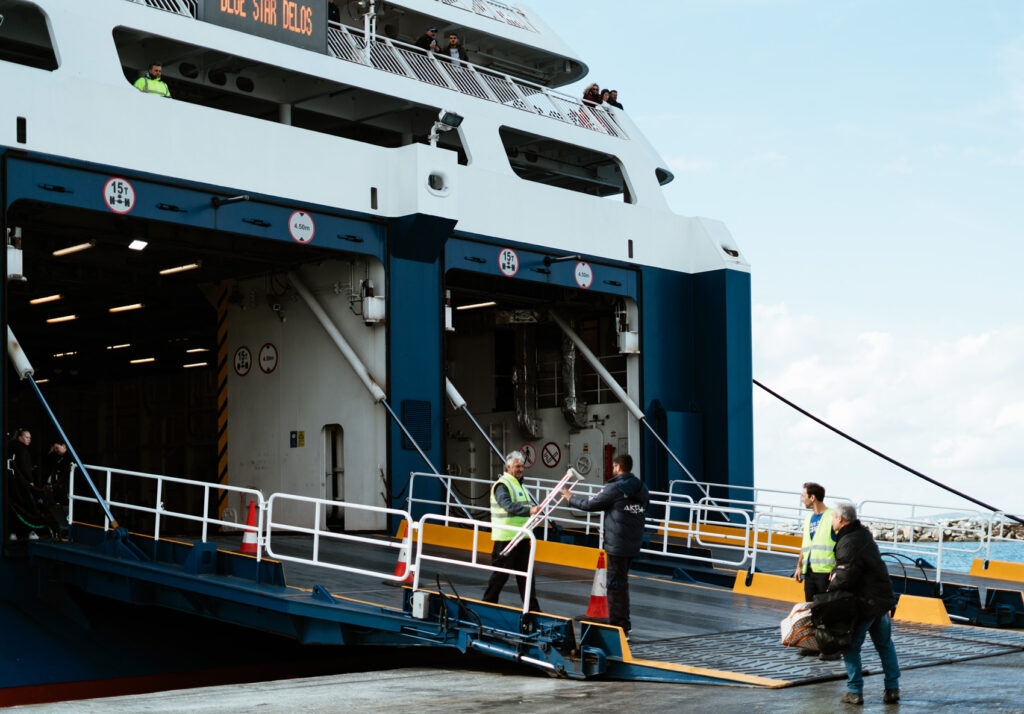
We book all our ferries through Ferryscanner because it pulls together schedules and prices from all the major operators in one place. The free cancellation policy up to 48 hours before departure is genuinely useful if you’re traveling with any flexibility in your plans.
If you’re visiting in shoulder season or winter, check the schedule early and book as soon as you have confirmed dates. The fewer daily crossings there are, the faster the good departure times sell out.
→ Search Ferry Routes on Ferryscanner
When to Book Accommodation
For June and September, booking four to six weeks in advance is generally enough unless you have a specific property in mind. For July and August, book months ahead, particularly for anything beachfront or near Agia Anna and Agios Prokopios. For spring and winter, you have much more flexibility, though it’s worth confirming the property is actually open before you book.Our guide to the best places to stay in Naxos covers the main areas by type and budget, which makes it easier to narrow down where you want to base yourself before you start searching.


Frequently Asked Questions
When is the cheapest time to visit Naxos?
The cheapest months to visit Naxos are November through April, when tourist infrastructure is reduced and accommodation prices are at their lowest. If you want low prices with the island still open and functional, May is the best option. You’ll find good availability, reasonable rates, and a liveable temperature without the summer premium.
Is Naxos good in October?
Early October is a solid time to visit Naxos. The sea is still warm from summer, temperatures are comfortable around 22°C (72°F), and crowds have thinned significantly from August. The first two weeks of October feel like a natural extension of the summer season. By late October, some businesses begin closing and the island starts winding down, so timing matters if you’re planning an October trip.
How bad are the Meltemi winds in Naxos?
The meltemi is a strong northerly wind that blows across the Aegean in summer, most intensely from mid-July through August. In practice, it’s unpredictable day to day. Some days it’s barely noticeable; others it’s strong enough to make certain beaches uncomfortable and to affect smaller ferry vessels. The southwestern beaches on Naxos are more sheltered from the wind. In June and September, the meltemi is generally milder and less frequent than at the height of summer.
Can you swim in Naxos in May?
The sea in May is around 19°C (66°F), which is cool but manageable if you’re comfortable with cold water. Most people find it refreshing rather than warm. By the second half of May, it’s warmer and more people are swimming. If swimming is a priority, June gives you noticeably better sea temperatures with only a moderate increase in crowds and prices.
Is Naxos worth visiting in winter?
Only for a specific type of traveler. If you’re looking for beaches, boat tours, open restaurants, or the classic Greek island experience, winter will disappoint. Most tourist businesses are closed from late October or November through Easter. What winter does offer is the island almost entirely to yourself, extremely low prices, and a glimpse of what Naxos is like as a place where people actually live. We enjoyed our November and December stay because we weren’t expecting summer. Go in with the right expectations and it can be a genuinely interesting experience.
Whatever time of year you end up going, Naxos rewards the people who explore it properly. If you’re still working out your trip, our Naxos itinerary is a good starting point for structuring your days, and our guide to the best beaches in Naxos will help you figure out where to spend them.